EQUIPMENT SIGNAL
A moment that matters.
A brief deviation
EquipmentSite average
More telemetry. Less of the detail.

NORTH RIDGE / SITE OVERVIEW
DOM is edge AI hardware and software that runs inference and retrains models directly at your facility, so your operational data never has to leave the premises.
Supported by the Claude Network Program
SCROLL TO FOLLOW THE SIGNAL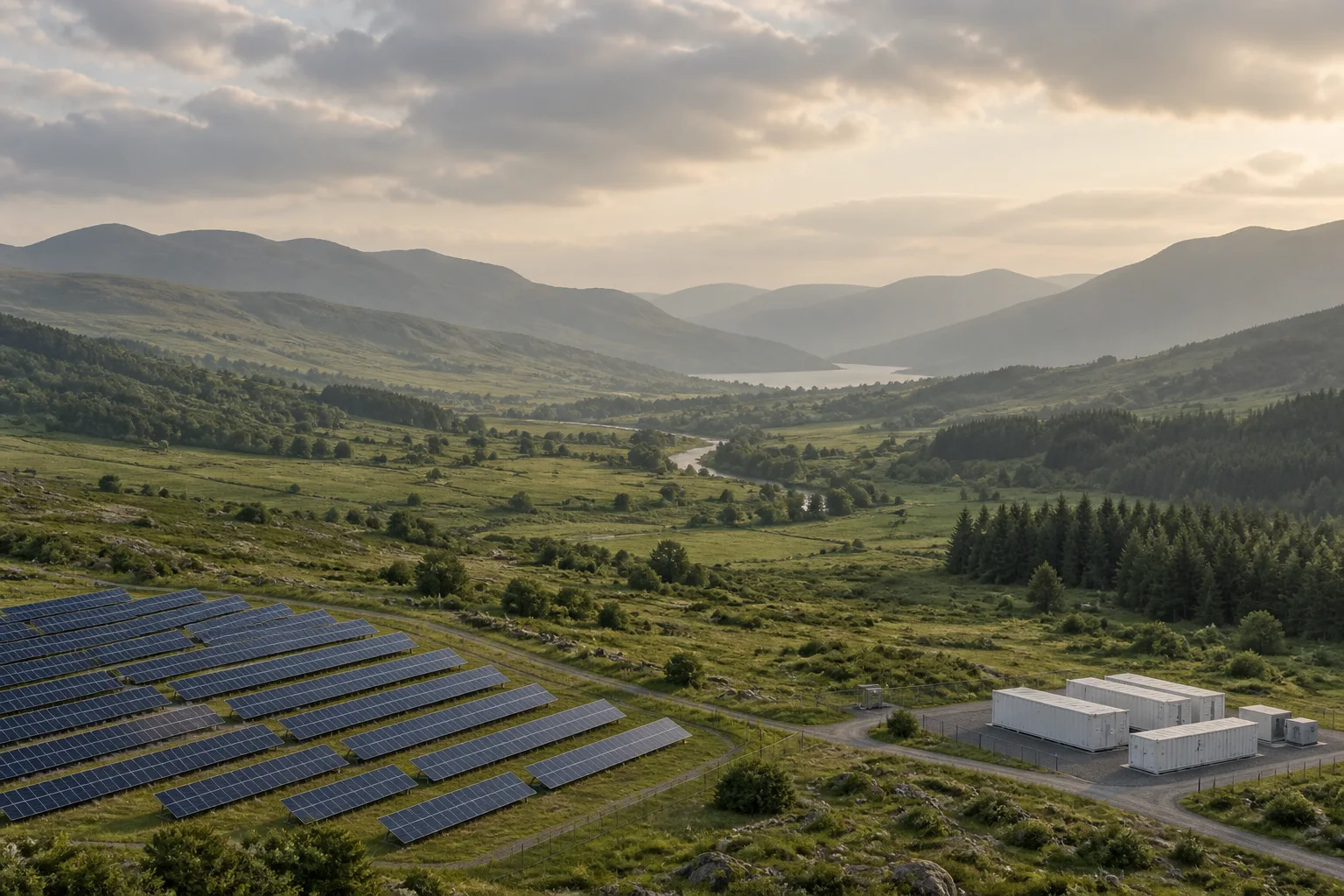 ILLUSTRATIVE SCENARIOS
More telemetry. Less of the detail.
A shared model isn’t a shared reality.
Your operation can’t wait for a connection.
Intelligence needs to live closer to the operation.
02 / HOW IT WORKS
Connect to existing equipment through read-only access. Raw operational data stays at your facility.
Your signals, captured locally.Run inference and retrain locally. Evaluate each candidate against the current model before it can take over.
A learning loop grounded in your site.Review advisories with their model version and recorded history. Your team decides what happens next.
Insight for people. Control stays with them.The RAIN Node hosts the runtime and your view of the site. Your operators decide. Your control systems remain separate.
Compute, storage and connectivity at your facility.
Conceptual architectureLocal models. Evaluated updates. Recorded history.
Review advisories, model versions and system health.
Working against a simulated plant. Preparing for a first field pilot.
Connected intelligence
Bring your existing infrastructure into one local intelligence layer. From the first signal to the next insight, everything stays on-site.
Signals converge. Control stays yours.
One continuous, local loop. Conceptual view.
From connection to clarity
Bring PCS, BMS, EMS, and HVAC signals together through read-only adapters. The connection observes your site while keeping control systems separate.
Existing infrastructureBring telemetry into a local record of your facility. Models learn from operating patterns in the simulated plant, building toward site-specific learning.
Site-specific learningRun inference and evaluate model updates on the RAIN Node. Keep the learning loop close to your equipment and your raw signals on-site.
Local inferenceReview advisories, model versions, and signed history in the local console. Your team makes the decisions; the system provides the context.
Operator insightFor asset owners, operators and maintenance teams. Start with one asset and agree what useful insight would look like.
Explore all use casesSOLAR / PROPOSED APPLICATION
Learn from inverter and tracker signals to surface changing behavior that can disappear inside aggregated performance reports.
Explore this use caseWIND / PROPOSED APPLICATION
Bring models closer to turbine telemetry. Look for changes in local signals without depending on a continuous cloud connection.
Explore this use caseSTORAGE / SIMULATOR FOUNDATION
Read battery, power conversion and environmental signals together. Learn site-specific thermal behavior while keeping control systems separate.
Explore this use case05 / BUILT FOR OPERATIONAL TRUST
The inference and learning loop uses local data. Raw telemetry is kept on-site; production uplink transport is not yet implemented.
The system observes and advises. Operators retain authority over equipment, control systems and any action taken.
A signed, linked history records inferences and model changes, including rejected updates. It is evidence to inspect, not a claim of certification.
We’re building on-site intelligence for facilities where raw operational data needs to stay local.
Renewable energy is our starting point. A battery-storage simulator is the current foundation; a scoped field pilot is the next validation milestone.
Telemetry capture, local inference, retraining, model evaluation and audit history implemented against a simulated battery plant.
Validate hardware, signal quality, alert usefulness and operating stability with a design partner. No field deployment is claimed.
Turn pilot learning into a repeatable installation and support process. Extend to additional asset types as adapters are validated.
Useful insights for operators. Reliable operation on-site. A repeatable deployment process. Commercial value established with customers.
07 / QUESTIONS, ANSWERED
No. RAIN is observe-only. It reads telemetry and produces advisories. There is no actuation path back into your plant control or safety systems.
The local inference and learning loop is designed to operate without runtime network egress. Raw plant telemetry stays on-site. The current simulator uplink is a local no-op; a production transport is not implemented yet.
The system works against a simulated plant and has not been field-deployed. The next step is a scoped pilot, with equipment access, signal quality and success criteria agreed in advance.
Define the asset and question, inventory available signals, agree a read-only boundary, then validate results against site conditions. Hardware configuration and commercial terms depend on that scope.
A candidate must beat the incumbent on held-out data before promotion. Otherwise the incumbent stays. The rejected candidate's evaluation is still recorded in the audit history.
08 / BUILD WITH RAIN
For operators exploring a pilot and investors evaluating the next stage.
Define the asset, the question and what success should look like.
Understand the product thesis, current stage and next milestones.